FirePro Tech

Residential Fire Safety

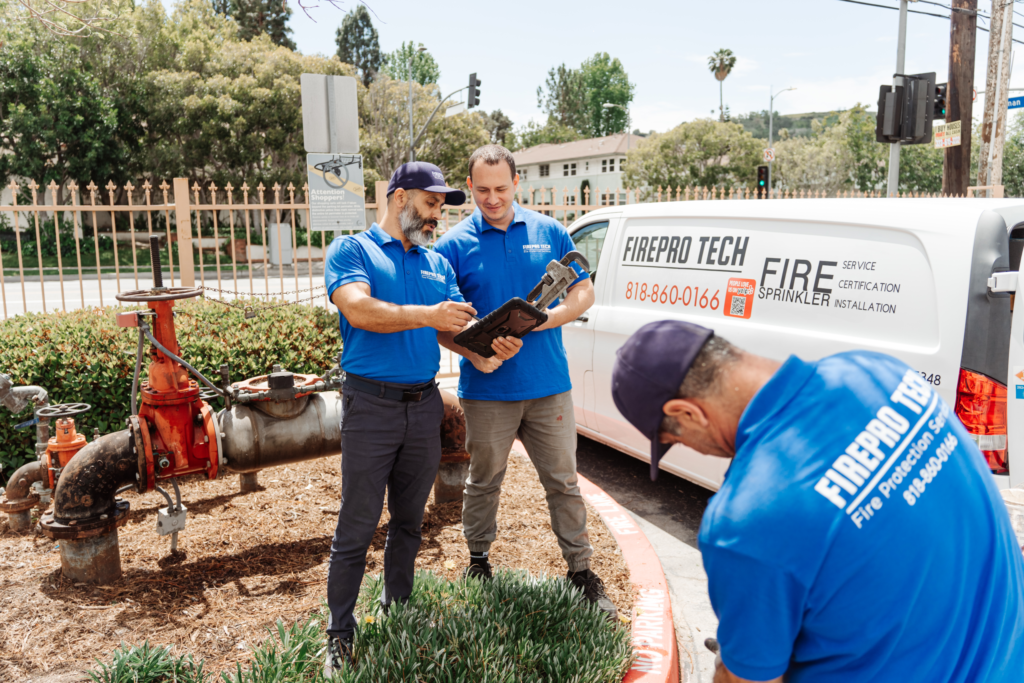
technicians discuss Fire Sprinkler Inspection Requirements
Commercial Fire Protection, Fire Sprinkler Test, Residential Fire Safety

Everything About Fire Sprinkler System Inspection Requirements

A fire sprinkler system is a kind of protection that should operate in the most stressful conditions. Since it guarantees your safety from a disastrous element like fire, it’s no wonder there are strict fire sprinkler system inspection requirements. In this article we are going to break down all of them so you can clearly see what’s important and why. Keep reading to learn secrets of California fire sprinkler inspection requirements and pass your inspection smoothly.  What Is Fire Sprinkler Inspection? As with any inspection, this one is made to ensure everything works as designed so the system won’t fail when needed the most. An inspector checks system components, water supply, valves, alarms, piping, sprinkler heads, and everything else. Among other California fire sprinkler inspection requirements, there are some crucial statements, like compliance with NFPA 25. In addition, your sprinkler system also should fit local building and fire codes. You might think that inspection and testing are the same thing. We cleared this question in our Fire Sprinkler Inspection & Testing: What You Need to Know article. In short, testing is done to find out and fix all issues with the system, while inspection confirms everything is alright.  Importance of Fire Sprinkler Inspection When there is no fire, you might think that system isn’t your first priority, so you put the inspection away. However, this action can be a regretful solution if something bad happens. Regular inspections ensure: As you can see, inspection requirements ensure that families will stay safe and protected from fire hazards.  Fire Sprinkler Inspection Requirements Frequency NFPA 25 provides a certain frequency for each type of system and property type. It’s important to remember that it’s up to authorities to adopt these intervals or assign others. In any case, regular service is also a part of fire sprinkler inspection requirements. For a deeper comparison of inspection intervals, read How Often Should a Fire Sprinkler System Be Inspected?. Regular Inspection Schedule: Quarterly, Semi-Annual, and Annual Checks Most systems follow this schedule: Quarterly Inspections Semi-Annual Inspections Annual Inspections In addition, internal pipe inspections and obstruction investigations may be required every five years. These intervals form the backbone of standard fire sprinkler system inspection requirements across commercial and residential properties. What to Inspect in a Fire Sprinkler System When you’re trying to meet inspection requirements for commercial properties, it’s crucial to remember that they involve a more detailed review. This is made to ensure safety even in big and highly occupied spaces. However, it won’t be a disadvantage to meet these standards in residential properties as well.  Key Components to Check During an inspection, professionals evaluate: Water SupplyAdequate water pressure and reliable connection to municipal or private sources. Pipes and FittingsLeaks, corrosion, obstructions, mechanical damage, and secure hangers. Control ValvesProperly positioned (open), sealed or locked where required, and free from damage. Sprinkler HeadsNo corrosion, paint, loading (dust/debris), or physical damage. AlarmsProper functionality of water flow alarms and supervisory signals. DetectorsIntegration with fire alarm systems where applicable. By the way, we were called the best fire sprinkler company in Glendale, so you can have a professional testing of your fire sprinklers with us. Visual Fire Sprinkler Inspection Requirements  It might seem like a preferable thing to do a visual inspection on your own, thinking you’ll notice if something is wrong. However, preventive visual inspection helps identify obvious deficiencies before they escalate. California fire sprinkler inspection requirements highlight the importance of visual checks.  Visual Inspection Checklist A professional fire sprinkler inspection checklist should include reviewing: LeaksAny signs of dripping, moisture accumulation, or pressure loss. Physical DamageBent pipes, broken sprinkler heads, or damaged fittings. CorrosionRust buildup on pipes, fittings, or heads that may restrict flow. Paint IssuesSprinkler heads should never be painted. Paint can prevent proper activation. Incorrect OrientationSprinkler heads must be installed in the correct upright, pendant, or sidewall position. Minimum ClearanceClearance is a crucial element for proper functioning of sprinkler heads. Ensure there is enough space from any obstructions around it.  You can use this list as a fire sprinkler inspection checklist to prepare before a real inspection with a professional technician. As well, visual checks are part of sprinkler maintenance. Our guide on Home Fire Sprinkler System Maintenance Tips provides a comprehensive insight into everything you should know about maintenance.  Fire Sprinkler Inspection Report Requirements The inspection won’t be valid without a detailed report. In this document, specialists will find a clear demonstration of compliance with fire sprinkler inspection requirements. A proper inspection report should include: For commercial facilities, maintaining accurate records is essential to satisfy fire marshals and insurance carriers. This is especially important for commercial properties, where audits and documentation reviews are common. Ensuring Proper Function and Compliance There are things we hope you’ll never have to see in action, and fire sprinklers are on this list. However, it’s impossible to escape a fire with minor damage without it. And we are strongly convinced that it’s cheaper to maintain your system from time to time than to calculate losses if it won’t activate during the fire. That’s the reason behind the importance of meeting fire sprinkler inspection requirements. It’s not a question of meeting fire sprinkler system inspection requirements only once after installation. Your system should stay in perfect condition all of the time, so both routine visual checks and annual or five-year testing are crucial to stay safe.  At FirePro Tech we are experts in California fire sprinkler inspection requirements, so with us you can be sure that all of them will be compliant with all state and local codes. Proactive inspections today prevent catastrophic failures tomorrow — and that’s a responsibility no property owner can afford to overlook
Can Vape Smoke Set Off Sprinklers
Fire Safety Tips, Residential Fire Safety

Will Vape Smoke Set Off Sprinklers? How Vaping Can Affect Fire Safety Systems

Of course everyone knows smoking is harmful to your health. And does it harm fire safety? This question sparks most debates about indoor vaping.  Is a thick cloud of vapor able to cause water to pour from the ceiling? And can vape smoke set off sprinklers or not? Let’s take a cool-headed look at how sprinklers really work and why fears often are simply fears. The Secret Science: Can Vape Smoke Set Off Sprinklers (And Why Not) Lots of people are ready to compare a sprinkler with… a non-smoker’s nose. Why? Because they think it will react to smoke right away.  Imagine a glass bulb filled with liquid. When the temperature shoots up, the liquid expands. The bulb breaks and releases it. This mechanism is connected to a fire sprinkler sensor, which is designed to detect heat (instead of visible vapor). What Activates a Fire Sprinkler? It’s critical to know that a smoke sprinkler reacts to heat, not visible smoke. The temperature needed to activate a smoke sprinkler is usually something like 135–165°F. Vape aerosol is simply not capable of heating the air to such temperatures. We discussed this point in detail in the article Does Smoke Set Off Sprinkler Systems? | Sprinkler Myths, which clearly explains the difference between smoke and heat. How Fire Sprinklers Detect Smoke and Heat Sometimes people confuse the fire sprinkler with a fire alarm. But in fact they are just different elements of the same system. Yes, a fire sprinkler sensor can trigger an alarm. However, it won’t activate without overheating. That is why the article What Causes a Fire Sprinkler To Activate emphasizes that the key trigger is temperature, not the visual effects of smoke. So when people ask, will vape smoke set off sprinklers? It sounds logical, but the answer is boring: no, it won’t. Can Vape Smoke Set Off Sprinklers, or 101 Myths About Vaping And Safety In practice, FirePro Tech experts encounter several hard-to-kill myths (not as many as 101, but still a lot). Here are the most popular ones: But can vape smoke set off sprinklers in reality? Well, many people think smoke can cause a fire sprinkler to be activated. It’s actually a myth that doesn’t stand up to facts. Why Vaping Isn’t the Villain Here The vapor from electronic cigarettes is just an aerosol. It dissipates as quickly as you blink. And of course it doesn’t really have time to heat the air. Even if you exhale a thick cloud, the temperature around a sprinkler does not rise to critical levels. And sprinklers stay passive until they overheat. So, vape and sprinkler simply don’t consider each other as a threat.  This principle gets explained step-by-step in the guide How Do Fire Sprinklers Work. Can Vape Smoke Set Off Sprinklers Accidentally? Well, can vape smoke set off sprinklers with no reason? Short answer is almost never. Accidental activations happen but for other reasons. And here are some of them: Vaping isn’t one of them. And not even theoretically. The Real Triggers You Should Actually Worry About Everything seems to be more or less clear with vaping. Surely candles are also no big deal for sprinklers, you think? Well, no. Any fire sprinkler is afraid of open flames (which candles produce), as well as overheating equipment and real fires with thick smoke. So be careful. No Safety Drama: Be Careful Instead You already know the answer to the most important question about vaping, but for 100% success, you need to know a few best practices. To keep the system working right, don’t cover your sprinkler with decorations. And, of course, don’t tease your sprinkler with a nearby heater. Last but not least, make sure to maintain your system regularly. This is what every pro home services contractor recommends. Like FirePro Tech, which deals with real incidents every day. Tips to Avoid Unnecessary Sprinkler Activation If someone asks you: can vape smoke set off sprinklers? You already know what to say. Anyway, it’s best to: This really reduces the risk of false alarms from a conventional sprinkler. Final Thoughts on Fire Safety and Indoor Air No worries, we won’t recommend that you read Allen Carr’s book or tell you about nicotine patches. Our article exclusively answers the question: will vape smoke set off sprinklers?  Well, in short, fire sprinklers don’t react to vape. But it still makes air quality worse and settles on surfaces (which is also not cool). Therefore, the best option is good ventilation or the outdoors. Your fire sprinkler will remain calm, and the air will be cleaner. Don’t think that smoke can cause a fire sprinkler to be activated. And to ensure that your sprinkler system is in good condition, feel free to contact the experts at FirePro Tech for maintenance assistance.

Residential Fire Safety

Do Fire Sprinklers Detect Smoke and Other Myths

You definitely have seen a lot of different sprinkler systems throughout your life. And if you or your children ever wondered “do sprinklers detect smoke?”, you’re going to find the answer in this article. At FirePro Tech we want to raise the fire protection awareness and explain questions like “do fire sprinklers detect smoke?” in easy terms. In this article you will learn what is actually activating the fire sprinkler and other secrets and myths about fire protection systems.   Do Sprinklers Detect Smoke or Heat? It’s a very common question: do sprinklers detect smoke or heat? People usually ask that since they know such things as smoke detectors exist and they are often installed in fire protection systems. However, fire sprinklers don’t detect smoke itself — they detect heat. You can even learn what temperature sets off fire sprinklers in our guide here and try to guess how much smoke alone you need to achieve such temperature.  You might be curious why not do sprinklers detect smoke? Usually, smoke detectors trigger at the slightest smoke activity, so your cooking pot might activate it during a safe daily routine. Still, it’s important to remember that a smoke detector and sprinkler system is a great bundle for your fire protection. Another popular question among homeowners is quite specific: do ceiling sprinklers detect smoke? And again, they don’t. Like any other sprinkler system they are also activated only by heat. Meanwhile, there is a smoke detector and sprinkler system combination that can enhance fire protection significantly. The smoke detector warns people about danger, launching an alarm sound. This ensures quick response and effective evacuation. The sprinklers, on the other hand, control and extinguish flames if the fire grows large enough. So, after all, the answer to the question “do fire sprinklers detect smoke?” is a solid “No!”. Only high heat can activate them, and there is no other way to create it than real fire. What Temperature Sets Off Fire Sprinklers? Now it’s clear that fire sprinklers detect heat instead of smoke, it’s time to understand what temperature sets off fire sprinklers. For most sprinkler systems the quick answer is from 135°F to 165°F. The numbers include that the sprinkler system may be installed in different rooms, both colder or hotter. So how exactly does the sprinkler system detect heat? Sprinkler heads contain heat-sensitive bulbs or fusible links. A special material in there physically melts or bursts when heated to the mentioned temperatures. Chemistry and physics couldn’t be hacked, so such an engineering solution minimizes false alarms while maximizing life safety. Of course there are places where the temperature of the air is constantly higher than in other rooms: kitchen, garages and attics. If you need an answer to what temperature sets off fire sprinklers there, then it’s 200°F or higher if special sprinkler heads are installed there. At FirePro Tech we can handle a sprinkler system inspection and specify if this is your case.  Common Myths About Fire Sprinklers Fire sprinklers save lives, yet myths discourage many from installing them. Here are the facts you should know: Myth #1: Sprinklers go off all at once. Movies often show every sprinkler activating simultaneously. In reality, each sprinkler head responds independently. Fire is usually controlled by the sprinkler closest to the heat source. Myth #2: Smoke alone triggers sprinklers. Many people ask “do ceiling sprinklers detect smoke” or “do sprinklers detect smoke?” Not at all — sprinklers activate only from heat. Smoke detectors handle early warning. Myth #3: Sprinklers cause water damage worse than the fire. Sprinklers release far less water than firefighters’ hoses. Unlike firefighters, sprinklers are actually there when fire is still small and can be controlled. At that point a quick response of a fire protection system will simply reduce overall damage dramatically. Myth #4: Putting a smoke detector and sprinkler systems is overprotecting Actually, they work best together. Smoke alarms can warn people inside about the danger, while the sprinkler system covers the flame before it spreads.  Myth #5: Sprinklers are expensive and unnecessary in small buildings. Today’s systems are cost-effective and often required by building codes because they drastically reduce loss of life and property damage.  How to Choose the Best Fire Sprinkler System Selecting the right sprinkler system depends on your building type, risk level, and local fire codes. At FirePro Tech, we guide customers through these essential factors: 1. Building Type and Layout Size matters when it comes to fire sprinklers. And building type matters as well. Different buildings are used for various needs, so to achieve the maximum protection and avoid overpaying it’s crucial to understand ceiling height, floor area, and occupancy. 2. System Type It influences the way your system works. There are several major system types: 3. Sensitivity and Response Time While people often ask “do sprinklers detect smoke or heat?” the real focus should be on how fast the system detects heat and activates. Quick-response heads are ideal for residential and commercial buildings. 4. Integration With Alarms You can install both a smoke detector and sprinkler system to enhance your protection. Early alert might save people inside from severe injuries and fire suppression from major damage.  5. Compliance and Maintenance Better safe than sorry, so calling for maintenance will ensure the system won’t let you down when you need it most. How to Choose the Best Fire Sprinkler System Choosing the right system matters — whether you’re protecting a home, office, or commercial facility. And the best decision is to consult an experienced professional. At FirePro Tech we offer fully tailored fire sprinkler services, from design to installation. You can learn a lot by reviewing our articles: Staying informed helps to answer the question “do fire sprinklers detect smoke?”, ensure your building meets safety codes and is protected by a reliable, modern system.

fire sprinkler insurance specialist
Commercial Fire Protection, Fire Safety Tips, Residential Fire Safety

Why Insurance Companies in California Require Fire Sprinkler Maintenance

Fire sprinkler insurance in California sounds like a simple safety guarantee. But it’s actually a little more complicated. Many home and business owners believe that if they have a sprinkler, the insurance will always work. In fact, insurers require regular maintenance of the system. Without it, you could face an unexpected insurance denial in the event of a fire. Fire Sprinkler Insurance and Claim Denials Imagine there’s a fire in the office. The sprinkler system seems to be in place. But there is one detail: no one has checked it for the last couple of years. When the insurance company arrives, the specialists immediately notice this: the system may have failed to work in time precisely because of the lack of maintenance. For the insurer, this is reason enough to refuse to pay out. It sounds harsh, but insurers operate by the rules. It’s not only important to them that the system is in place but also that it’s in good working order. If it fails to work due to lack of maintenance, the owner is fully responsible. That’s how fire insurance coverage in California works. Fire Insurance Coverage in California – The Rules California’s commercial fire insurance coverage regulations are quite strict. According to the U.S. Environmental Protection Agency (EPA), the state has to deal with fires more often than other regions of the United States. That’s the reason why fire insurance coverage in California necessarily includes a clause on the technical condition of fire systems. Several basic rules apply here: So, as you see, fire sprinkler insurance is not only a signature in the contract but also an obligation to keep an eye on the equipment. Home Insurance Fire Coverage and Sprinklers Homeowners often think, “I have regular basic insurance, which means I already have a protection.” But home insurance fire coverage is exclusively about sprinklers. If a home has a system, the insurance company expects it to be in good working order. And the only way to prove that it’s in good working order with timely and proper testing. What’s more, serviceable sprinklers can even lower the cost of the insurance. It’s better to minimize all the risks. But if the system is broken and the owner didn’t notice it, the consequences will be unpleasant. Commercial Fire Insurance Coverage Requirements For businesses, the commercial fire insurance coverage requirements are even stricter than for residential homeowners. Commercial fire insurance coverage includes not only sprinklers, but also regular reports on their condition. Larger companies even hire separate service organizations to keep logs of inspections. Imagine a store, a warehouse, or a restaurant. Any system failure here means huge losses. And the insurer is only willing to pay if the owner has proof that he did everything possible to prevent the disaster. So, don’t forget about annual and 5-year inspections to check if everything is still fine with your system. The Cost of Skipping Maintenance Why spend money on skipping maintenance? It’s all working! Well, that’s a common mistake. The cost of this frugal approach can be catastrophic: So, a small saving today turns into a big expense tomorrow. Be careful not only of the requirements for installing a sprinkler system but also of how it behaves in real life afterward. Protect Your Insurance and Your Property Fire sprinkler insurance in California is not just a formality. It is a guarantee that in a critical moment the protection will work and the insurance will cover the losses. To protect yourself, there are three simple steps to remember: have your system inspected at least once a year, keep all inspection records, and only work with licensed companies. To get your system tested, please contact us. That’s exactly what FirePro Tech is: call us at (818) 860-0166, and we’ll be there in no time to make sure you and your system are safe. Our team shares more helpful tips and real-life case studies on our social media channels: Facebook and Instagram. Subscribe to save your property and your nerves safe and sound.

FirePro Tech team knows when are fire sprinklers required in residential buildings
Fire Safety Tips, Residential Fire Safety

Understanding the Requirements for Fire Sprinklers in Residential Buildings

A tricky question: when are fire sprinklers required in residential buildings? It’s tricky because the rules really differ from state to state. Let’s explore some of them to avoid fines and, more importantly, keep people safe. California (like any other US state basically) has its own fire sprinkler code requirements. So, how does California fire sprinkler law work? It requires the system installation even in new one-story homes. This is all due to the high density of buildings and the risk of rapid fire spread. What Are Sprinkler Systems?  In short, a sprinkler system is an automatic fire extinguishing mechanism and the main trigger for it is high temperature. First, you hook it up to the water supply. After that, it sprays water. It happens only when a special detector feels extreme heat (like there’s a fire).  Benefits of Sprinkler Systems Installing fire sprinklers residential systems in your home offers a big number of undeniable advantages: When Are Fire Sprinklers Required in Residential Buildings? However, when are fire sprinklers required in residential buildings? The answer to this question lies in both general building regulations and local legislation. In most cases, installation is mandatory in: California fire sprinkler requirements are quite strict. They apply even in homes larger than 1,000 square feet. And this came as a surprise to many homeowners who want to pass any kind of inspections.   Legal Requirements for Sprinklers in Residential Buildings California fire sprinkler law stipulates that any new residential property must have a sprinkler system. Exceptions are rare, so don’t even worry about them. Residential sprinkler system requirements don’t apply only to tiny buildings. Fire Sprinklers in Condos, Townhouses, and Multi-family Residences Residential sprinkler system requirements in residential buildings are even stricter if several families live there at once. And this is understandable: more people means greater responsibility. In this case it’s important to consider not only the floor space. The layout (e.g., the number of exits, staircases, and common areas) also plays an important role here. Key Factors That Determine Sprinkler Requirements Building Height In buildings with three or more floors, sprinklers are almost always mandatory. That’s because evacuation is more difficult from tall buildings. Building Size A large area increases the risk of rapid fire spread. That is why fire sprinklers residential systems are mandatory in most states for homes over 1,000–1,500 square feet. Type of Construction Wooden structures require more stringent protective measures than concrete or brick structures. Occupancy Type The more people living in a building, the higher the likelihood of fire is. This means a greater danger during evacuation. And a greater necessity of fire sprinklers residential systems, of course. Water Supply Requirements for Residential Sprinkler Systems First of all, you need to make sure you have enough water pressure, in most cases, it must be at least 50 psi.  Don’t skimp on this! And keep in mind that sometimes you’ll need to install a separate pump or tank. Additional Recommendations for Residential Sprinkler Systems Sometimes it is not mandatory by law to install the fire sprinkler residential system. However, experts advise doing so in: Yes, it is not required by law, but it’s the best way to avoid other safety violations. And these, in turn, can result in tragedy.   Why Choose FirePro Tech for Your Residential Sprinkler Needs? FirePro Tech offers a full range of services: design, installation, and maintenance of residential fire sprinklers. We work in accordance with all California fire sprinkler requirements and select the optimal solution for each home. Our specialists will help you understand when fire sprinklers are required in residential buildings. So, be sure we will install the system as soon as possible. We do not recommend testing the limits of the CA law or the safety of your premises. Order sprinkler installation from the best contractor in your area right now at (818) 860-0166 to be sure about tomorrow. And, of course, don’t forget to follow us on Facebook and Instagram.

how much does a fire sprinkler system cost is a question of pipe length as well
Residential Fire Safety

Сost of Fire Sprinkler System in 2025

To keep financial and fire anxiety away, arranging a budget is critical. Today your fire safety is priceless. However, there are certain numbers for the cost of fire sprinkler system in 2025 that will help you shape the budget. Whether you have a business or personal house to protect, keep reading this article. Here you’ll find out the sprinkler system cost to carefully plan your safety upgrades. How Much Does a Fire Sprinkler System Cost? Fire Sprinkler System Cost Factors Installation of any protection system is a complex process. Hence, the fire sprinkler system cost is also built part by part. Here are the key drivers: Square Footage The size of the property is your first variable  in the question of how much does a fire sprinkler system cost. The bigger the size of your property, the more heads and pipes are needed, so the prices go up. All in all larger buildings require more piping, heads, and installation time. Of course, you’ll find a lot of systems for fire protection and we can give you a hint what excatly diffrent between them. New Home vs. Add-On Installing a system during new construction is considerably cheaper than retrofitting an existing structure. New builds provide easy access for pipes and wiring, reducing labor and material costs. Retrofitting can increase the home fire sprinkler system cost by 50% or more. Usually this happens because of drywall removal and other adjustments. Pipe Material CPVC (chlorinated polyvinyl chloride) is commonly used for residential systems and is cheaper than steel. Moreover, building codes usually require such pipes in commercial buildings. Pipe choice has a direct impact on both residential and commercial fire sprinkler systems cost. Alarm Bell or Horn  Fire sprinkler system alarm bells or horn devices can be a great addition, though they aren’t usually listed as must have add-ons. While these devices are essential for early warning, they can increase the overall sprinkler system cost by another $500–$800 to the final cost of fire sprinkler system installations. Permits and Inspections Usually, the local  building department can require permits and inspections, especially for commercial buildings. These procedures cost between $300 and $1200. This is also a part of a home fire sprinkler system cost which is important to include to the budget. Water Source In certain cases, building and safety regulations necessitate an increase in your existing water pressure. This requirement ensures that it’s possible to enable the connection of the fire sprinkler system. In this scenario, it is imperative that you thoroughly inspect your system, verify the pressure levels, and assess the adequacy of your water supply. These solutions offer enhanced peace of mind, but also result in a significant increase in the home fire sprinkler system cost. It’s ranging from $1,000 to $3,000. However, homes with no pressured water also require installation of the pumps or storage tanks. If you use a well or have a low water pressure, prepare to add around $2,000–$8,000.  Backflow Preventers For commercial setups, backflow preventers are essential to avoid contamination of public water supplies. These can cost between $1,400 and $12,500, contributing to higher commercial fire sprinkler systems cost. Additional Costs to Consider Beyond the core components, there are other potential investments required for a fully functional and code-compliant system. Additional Equipment to Enhance a Fire Sprinkler System Maintenance Costs Installing a proper fire protection system isn’t the end of the fire safety story. To make sure it won’t let you down, the maintenance is critical. Inspections cost around $350-$500. Having an inspection at least once a year is our best recommendation to find the balance between savings and safety. However, some states may mandate quarterly checks, especially for commercial properties, increasing long-term expenses. Private Fire Hydrants For large commercial properties, private fire hydrants may be needed. Installation costs can range from $3,000 to $7,000, especially if excavation or special permits are involved. How Much Does a Fire Sprinkler System Cost to Install Yourself vs Hiring a Pro We highly recommend calling a professional to install your fire sprinkler system! But let’s  make an honest comparison. How much you can save on labor by DIY installation? Hiring a certified professional adds $1,500–$5,000 in labor and ensures compliance and reliability. Remember that DIY mistakes can lead to failed inspections, damage, and severe safety risks. Ways to Reduce Residential Fire Sprinkler System Costs Conclusion The price for your fire protection system is a combination of different factors. Some of them are pretty obvious, others are hiding in the after installation procedures. However, correct planning of your safety budget will save you money and will help make informed decisions. And here you can team up with FirePro Tech. We provide detailed pricing for our services. Reach us by (818) 860-0166 and schedule the estimate of your coming safety project with us. Don’t forget to find us on Facebook and Instagram to learn everything about fire safety while scrolling your feed.