
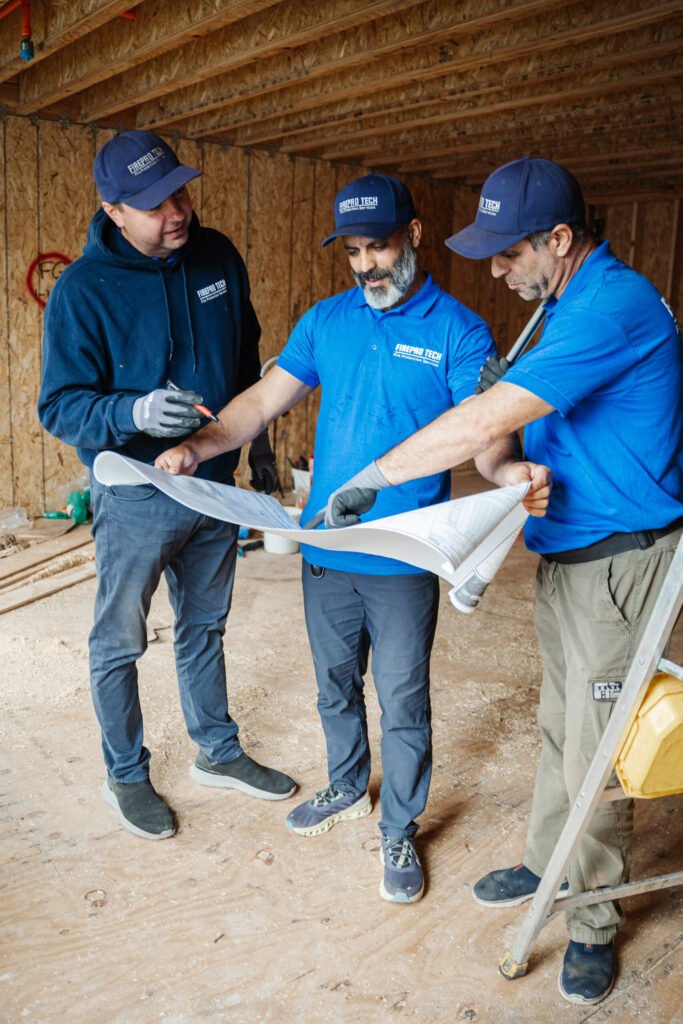

Residential fire sprinkler system cost is one of the first questions homeowners ask — and one of the hardest to answer without context. The honest range runs from under $6,000 for a simple new build to over $15,000 for a retrofit in a large finished home. The cost of residential fire sprinkler system installation depends on factors most cost guides gloss over — system type, home layout, permit requirements, and whether you’re building new or working around existing walls.
This breakdown covers what drives the price, what gets hidden in quotes, and what FirePro Tech sees on real jobs across Los Angeles and LA County. Understanding residential fire sprinkler system cost upfront prevents the kind of surprises that show up mid-project.
The case for the investment is clear: compared to fires in properties with no automatic extinguishing systems, the civilian death rate is 90% lower and the civilian injury rate is 32% lower when sprinklers are present, according to NFPA’s 2024 U.S. Experience with Sprinklers report. The average fire loss in a house with a sprinkler system is $2,166, compared to $450,019 in a home without one, per the Home Fire Sprinkler Coalition.
What Drives Residential Fire Sprinkler System Cost?
Home Size
Bigger homes mean more pipe, more heads, and more hours on the job. New construction installation runs $4.50 to $8 per covered square foot. Adding a fire sprinkler system to an existing home costs more — between $6 and $8 per square foot — due to the additional demolition and reconstruction work required. Residential fire sprinkler cost per square foot is the most useful metric when comparing quotes, but only when the scope is identical.
For a standard 2,500 sq ft home: budget $9,500–$12,000+ for new construction and $12,000–$15,000+ for a retrofit. Residential fire sprinkler system installation cost at the higher end typically reflects extensive finish restoration in a fully finished home.
System Type
Wet pipe systems — water sitting in the pipes, ready to discharge — are the most common and least expensive. Dry pipe systems hold compressed air instead of water until a head activates, which means more components and a higher price tag. Multipurpose systems share the existing household plumbing and skip the dedicated piping — a more affordable path for new builds.
For a full breakdown of system options, see our guide on different types of sprinkler systems.
Location
Labor rates, permit fees, and local code requirements all vary by jurisdiction. In Los Angeles and LA County, local AHJ requirements and NFPA 19/25 compliance add inspection layers that other markets don’t have. Both cost and timeline feel it.
In-Home Placement
Open floor plans with standard ceiling heights cost the least to work with. Finished attics, tight crawlspaces, and multi-story layouts push complexity up. Concealed heads — required in some finished spaces — run more than standard pendant heads.
Labor
Labor accounts for 40–60% of total installation costs. In 2026, new construction labor runs $3.75 to $5.25 per square foot for a basic system. Retrofit work pushes that figure significantly higher — wall and ceiling access adds hours fast.
Permits
California requires permits for virtually every residential fire sprinkler installation. Fees run $550 to $1,650 depending on location and project size. Budget for plan review, a mid-install check, and a final inspection — all standard in LA County.
Additional Features
Concealed heads, smart monitoring, and advanced alarm panels push the price up.
Additional Cost Factors to Consider
- Water meter upgrades — standard meters sometimes can’t handle the flow for a sprinkler system needs. Upgrades run $9,500–$13,000 and often don’t appear in contractor quotes.
- Backflow preventers — required in most LA City jurisdictions when connecting to municipal supply.
- Well water systems — no municipal supply means a booster pump and storage tank, adding $6,000–$12,000.
- Pipe material — CPVC is affordable and common. Steel is required in NFPA13 and costs significantly more.
New Construction vs. Retrofitting: What’s the Real Cost Difference?
This is where the cost gap is largest — and most misunderstood.
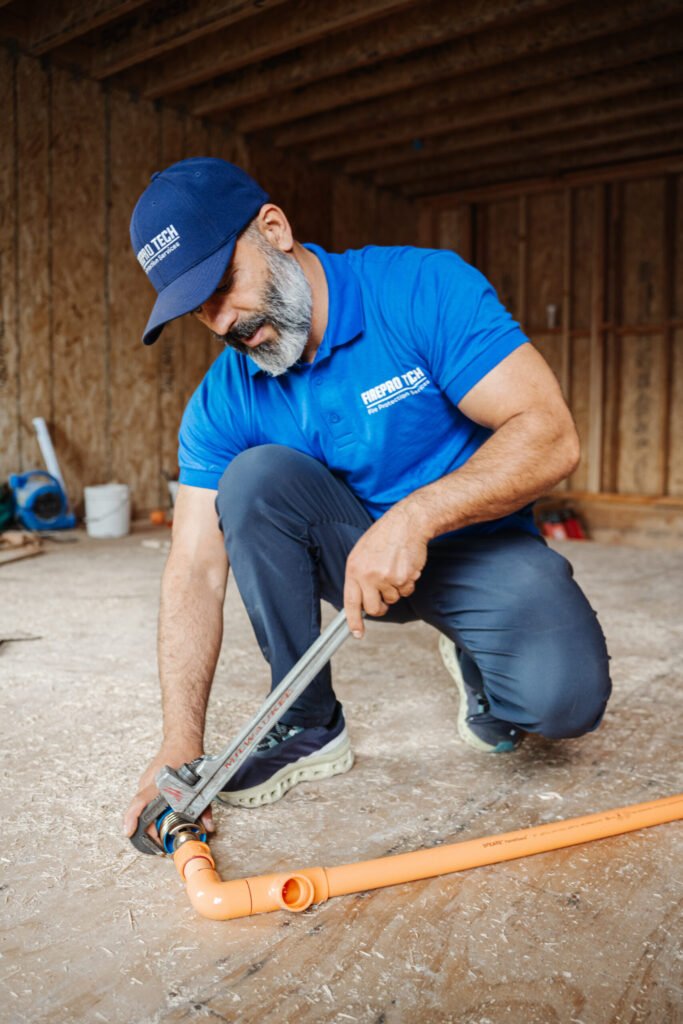
In new construction, walls and ceilings are open. Pipe runs alongside electrical and HVAC before drywall goes up. The work is fast, unobstructed, and efficient. That’s why new construction costs stay in the $4.50–$6.00 per square foot range.
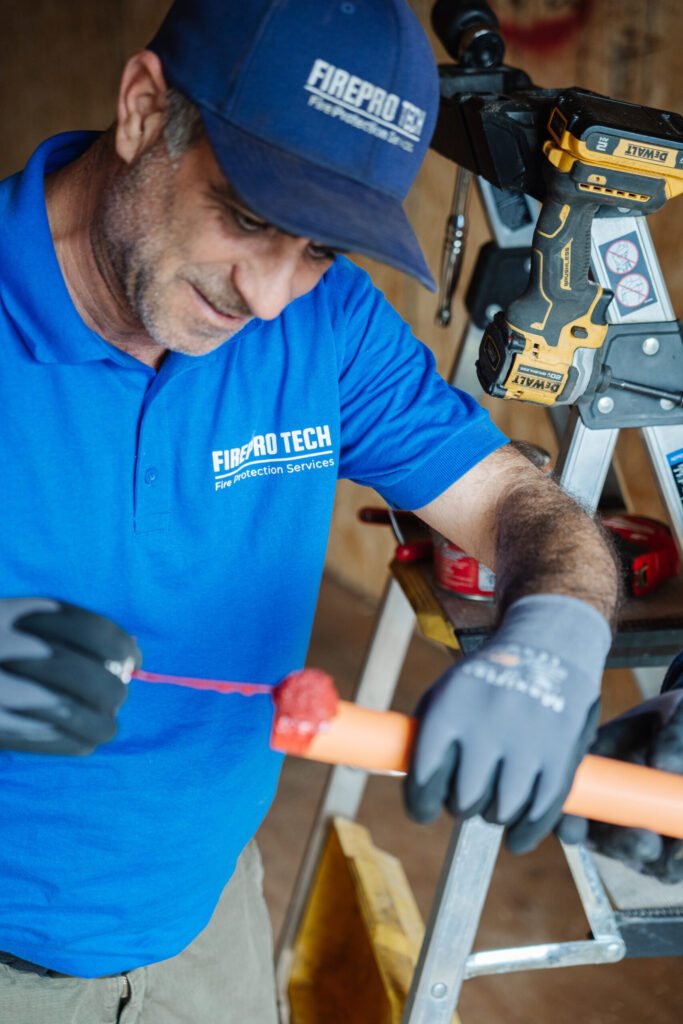
Retrofitting is different. The expensive part isn’t the plastic pipes or the sprinkler heads — it is the demolition and repair. Installers have to cut trenches into finished ceilings and walls to navigate around existing infrastructure. Afterward, a professional drywaller and painter must patch the openings. That labor adds up fast.
Older LA homes — many built before residential sprinkler codes existed — add another layer. Plumbing capacity, older pipe materials, and water supply limitations all get evaluated before a quote goes out. Our full guide on retrofitting a fire sprinkler system covers what that process actually looks like.
Numbers to plan around: $7,500–12,000 for a 2,500 sq ft new build. $8,000–$15,000+ for the same home as a retrofit. The cost to install residential fire sprinkler system in an existing LA home almost always lands higher than online calculators suggest — because they don’t account for local permit layers, water meter upgrades, or finish restoration.
“The most common mistake we see on retrofit quotes is a number that covers the pipe and heads but excludes everything that comes after — drywall restoration, permit fees, water meter upgrades. By the time those get added, the project costs 30–40% more than the original quote.” — Robert CEO, FirePro Tech, C-16 Licensed, Los Angeles
Are There Hidden Costs in Residential Fire Sprinkler System Quotes?
Yes — and they’re common enough that FirePro Tech flags them on every estimate.
The most frequent surprises:
- Water meter tap fees — cities sometimes charge $2,000–$5,000 to upgrade the service connection to handle sprinkler flow requirements. This fee doesn’t appear in most contractor quotes.
- Drywall and paint restoration — retrofit quotes often cover the pipe and heads, not the finishing work afterward. Get clarity on what the quote includes.
- Inspection fees beyond permits — some jurisdictions bill separately for each inspection visit, not just the permit.
- Structural modifications — fire-rated assemblies, existing HVAC runs, unusual framing — any of these add hours.
- Annual inspection costs — ongoing inspections run $300–$500+ per visit. Factor this into the long-term budget, not just the installation number.
Getting a complete picture of residential fire sprinkler system cost means asking every contractor to itemize — not just quote a per-square-foot number.
Ongoing Costs of a Residential Fire Sprinkler System
Installation is the largest expense — but not the only one.
Warranties
Most systems come with manufacturer warranties on components. Labor warranties vary by contractor. At FireProTech, every installation includes a labor warranty — ask any contractor you’re considering to specify what’s covered and for how long.
Operating Costs
Minimal under normal conditions. The system uses no electricity and no water until activated. Some multipurpose systems have water flowing through them regularly as part of household use, which actually reduces the need for annual flushing.
Maintenance
Annual inspection is the standard requirement under NFPA 25 and California Title 19. Costs typically run $650–$1500 per visit. Inspections cover flow tests, valve checks, head condition, and pipe integrity. Skipping inspections risks voiding warranties and creates compliance exposure.
Taxes
Installing a fire sprinkler system may affect property assessed value in some California jurisdictions. Check with your local assessor’s office — the impact varies and isn’t universal.
Insurance
This is where ongoing costs can actually turn positive. Many insurers offer premium discounts for homes with professionally installed and maintained fire sprinkler systems. The discount ranges widely — some carriers offer 5–15% reductions on homeowner premiums. Over time, those savings offset a meaningful portion of installation cost. Over a 10-year period, the cost of residential fire sprinkler system ownership often looks very different once insurance savings are factored in.
How Do Fire Sprinkler Systems Affect Home Insurance in California?
The short answer: favorably, in most cases.
Insurers treat residential fire sprinklers as a significant risk reduction. Many insurance companies offer discounts for homes with automatic fire sprinkler systems. To qualify, most carriers require documentation that the system is professionally installed, C-16 licensed, and properly maintained with current inspection records.
In Los Angeles, where wildfire exposure and fire risk are elevated, the insurance angle is particularly relevant. Some carriers — especially post-2025 market tightening in California — now factor sprinkler presence into underwriting decisions beyond just premium discounts.
FirePro Tech provides certified inspection reports that meet insurer documentation requirements. More on fire sprinkler insurance requirements in California.
How to Reduce the Cost of Residential Fire Sprinkler System Installation
A few approaches that genuinely move the number:
Install during new construction. Residential fire sprinkler cost drops dramatically when the walls are still open — $4.50–$6.00/sq ft versus $6–$8+/sq ft for a retrofit. Major renovation is the next best window.
Choose a multipurpose system. Fewer pipes, fewer fittings, less labor. Lower cost to install residential fire sprinkler system and a lower maintenance burden going forward.
Get multiple quotes — and read them carefully. Scope matters more than the headline number. Pipe, heads, permits, inspections, finish restoration — confirm what’s in and what’s not. A low residential fire sprinkler system installation cost that excludes patch work isn’t a low number.
Check for local incentives. Rebates and reduced permit fees exist in some California jurisdictions. The cost of residential fire sprinkler system installation sometimes drops with programs that don’t get advertised — ask at the permit stage.
Maintain the system consistently. Skipped inspections become expensive repairs. A $650 annual visit is cheaper than a $2,000 component failure down the road.
Get a Free Estimate from FirePro Tech — C-16 Licensed in Los Angeles
Residential fire sprinkler system cost varies too much to quote without seeing the home. FirePro Tech assesses the property, identifies the right system type, flags hidden cost factors before they show up on an invoice, and gives you a real number upfront.
FirePro Tech serves Los Angeles and LA County. C-16 licensed fire sprinkler contractor. Every installation meets NFPA 13D and California Title 19 requirements.
📞 Call FirePro Tech for a same-day consultation. 📸 Instagram | Facebook
Related reading: