


Need your fire sprinkler system to do its job right? You should know about fire sprinkler components. Every single piece from the head to the valve plays a role when it comes to fighting fires fast. Having a good grasp of the fire sprinkler components helps not only pros but also building owners make smart choices about maintenance and prevention.
Let’s find out what these parts are and what they do.
1. Sprinkler Heads: Why They Are the Heart of the System
Sprinkler heads are the most visible components. Not a surprise that they fight the fire first. These fire sprinkler head components spray water directly onto the source of the fire.
They come in different types:
- pendant (hanging);
- upright (pointing upward);
- concealed (hidden)
- sidewall (wall-mounted).
Proper choice of the head and its following installation is not only a matter of aesthetics but also of safety. Heads must not be covered by light fixtures or other structures. Optimal placement ensures even water distribution and limits the risk of fire spreading.
2. Piping System: Components for Water Distribution
It’s truly the lifeblood of the system. Pipes made of steel (or CPVC, or sometimes copper) take water to all the sprinkler heads.
Systems with different piping can be:
- wet (constantly filled with water);
- dry (compressed air until activated);
- pre-action;
- deluge.
Smooth design ensures that all automatic components work together and that water reaches each head at the correct pressure. If you want to learn more about the individual parts of various designs, check out our article Different Types of Sprinkler Systems.
3. Control Valves: Details That Keep Everything Under Control
Control valves regulate water flow. Thanks to them, it’s possible to service the system without shutting down a whole building. Gate valves, butterfly valves, inspector’s test valves… these are just the most popular types.
Each valve is responsible for a specific section. And clear labeling means quick work for inspectors. Monitoring these fire sprinkler system components means nothing but the reliable operation of the entire system.
4. Alarm and Flow Switches: Dispatchers of Real Safety
But what controls the flow of water? The answer is alarm valves and flow switches. These components of a fire sprinkler system send a signal when the sprinklers are activated. Flow switches respond even to small leaks.
These fire sprinkler components provide visual and audible alarms, which are important for the rapid response of services and people in the building.
5. Water Supply: Options for Fire Sprinkler
Without a reliable water supply, even the best components of a fire sprinkler system will not help. Sources can be municipal, reservoirs, or a combination. In large buildings, booster pumps are used to maintain pressure.
Correct calculation of pressure, flow, and reserves ensures that all the parts of an automatic fire sprinkler system can simultaneously supply water to all heads.
6. Fire Pump System: How It Supports Pressure
Pumps increase pressure when the water supply network cannot cope. Its design is quite obvious: an electric motor or diesel engine, controllers, and safety valves.
Regular inspection of these fire sprinkler head components from a good contractor ensures that water will reach every head, even in skyscrapers. But how to correctly install them together with the other components is a different story.
7. Backflow Preventers and Test Valves: Functions and Safety Importance
Dirty water can’t get back into the water supply thanks to backflow preventers. Test valves help check the system in a safe way.
These parts are super important for keeping up with the rules and protecting people and equipment.
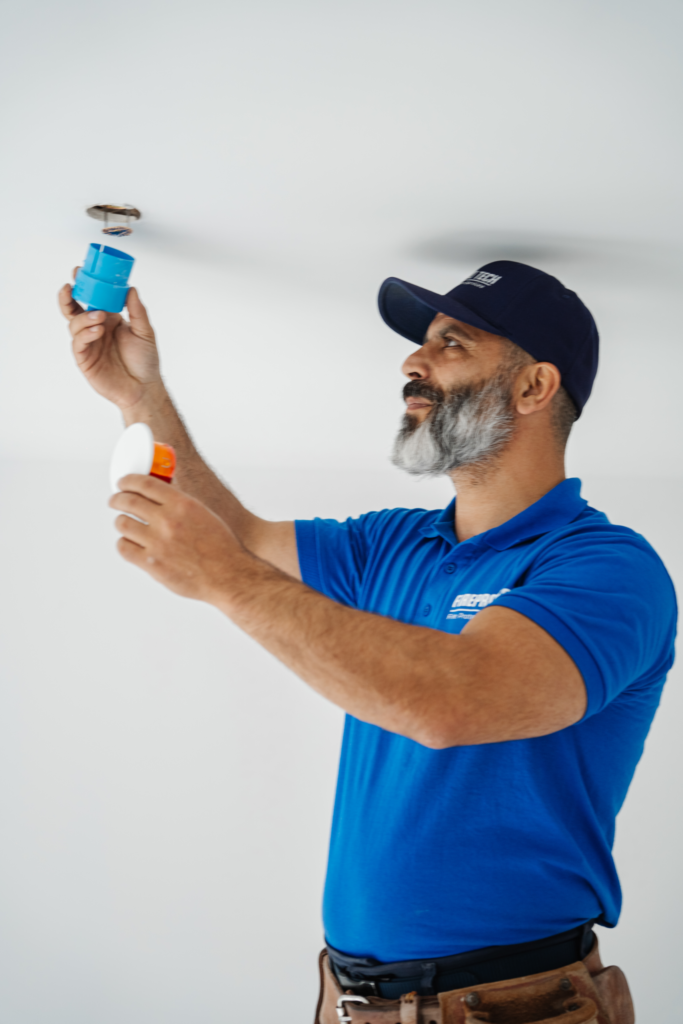
Puzzle Need to Be Completed: Integration of Components
All fire sprinkler components work as a single mechanism. Even a minor malfunction can reduce the effectiveness of the system. It’s like a puzzle: if one piece is missing, the picture won’t come together. And in order to plan maintenance and upgrades without interrupting the building’s operations, you need to clearly understand how to put the picture together.
If you are interested in learning more about this, read our article about How Fire Sprinklers Work.
Why Knowing About Fire Sprinkler Components
It’s not just pros who benefit from knowing tons of everything about components of a fire sprinkler. You as an owner can make smart decisions about repairs and inspections and feel confident with this knowledge. Sounds like a real super power, right?
Take Care of Your Fire Sprinkler Components, and They Will Take Care of You
Regular maintenance is the key to a long system life. Checking valves, cleaning heads, testing pumps… Every action helps prevent failures and saves drastically on repairs.
Just learn about the components of a fire sprinkler, and you’ll be able to protect people and property. Don’t put off inspections. Why? Because safety starts with taking care of every single part.
Want to install or upgrade a fire suppression system? Reach out to the fire safety services pros at FirePro Tech for the best CA solution for your building.