
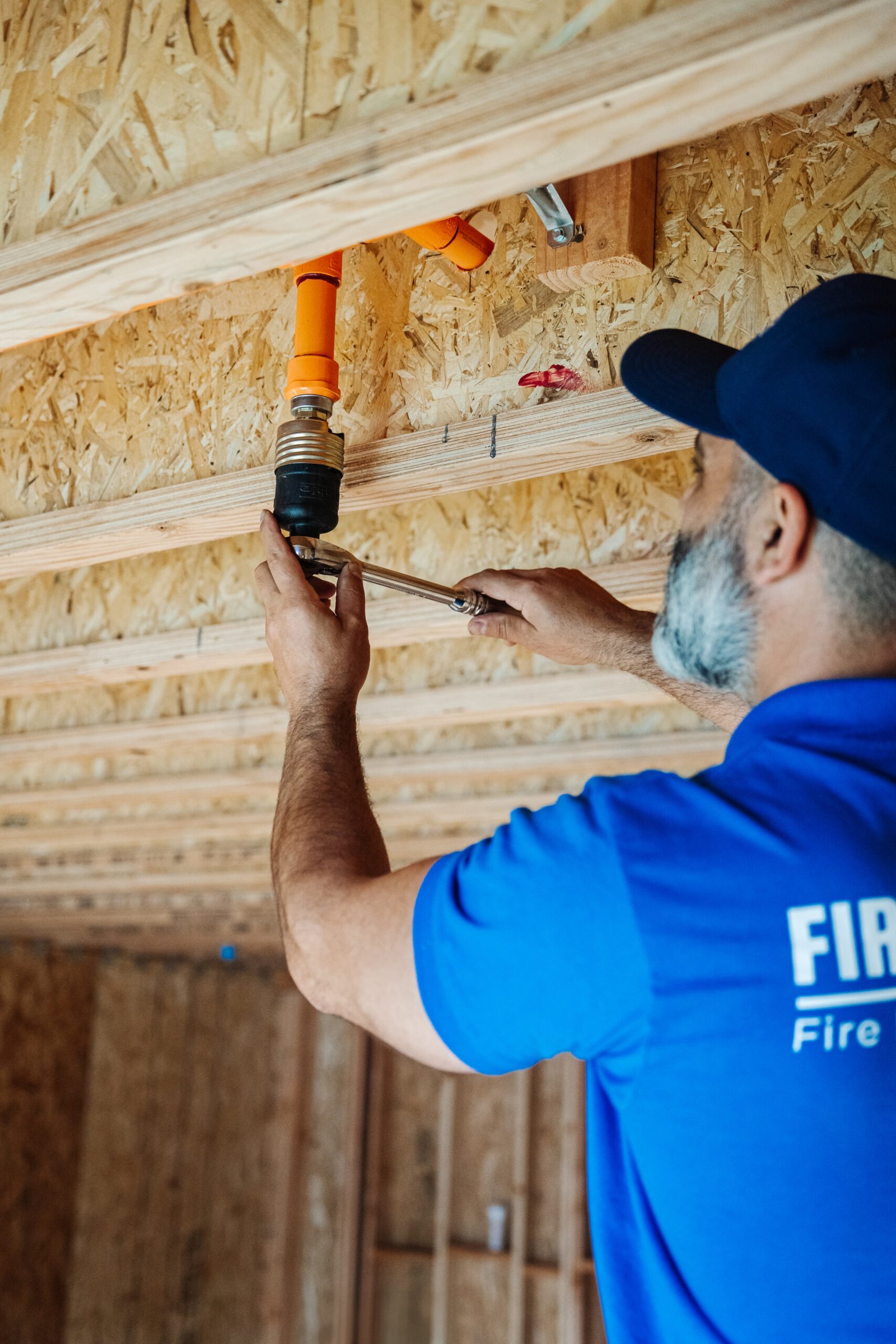
When you’re considering a fire protection upgrade with a quick response sprinkler head system, you should definitely know how it works. This is a crucial step since you’re likely going to have a debate around quick response sprinkler vs standard response systems. In this article, we’re going to clarify how each system activates and how time delay differs between both systems. At FirePro Tech we want to ensure that you’ll make an informed decision on the system. As well as you are aware of all important details.

How Fire Sprinkler Response Time Affects Fire Control
When the fire is at its early stage, it can be controlled and fought with simple measures. However, it might take only seconds to grow big enough that only professional firefighters will be able to take it down. That’s why it’s essential to pay attention to quick response fire protection. Less time needed to activate means less heat and smoke released as well, which keeps you and your sensitive appliances and devices safe. To better understand the fundamentals behind activation, it helps to review how to fire sprinklers work. In simple terms, sprinkler heads react individually to heat, opening only where the fire occurs.
Standard vs. Quick Response Sprinkler Head: Overview
The comparison between quick response sprinkler vs standard response systems is not about which is “better” overall, but which is better for a specific application. Both types are tested and approved under strict standards, yet they behave differently during the early moments of a fire.
Quick Response Sprinkler Heads Explained
Quick response heads are designed with smaller thermal elements that heat up and activate faster. A fast response sprinkler head can discharge water sooner, helping control fires before they spread beyond the room of origin. These sprinklers are commonly used in places where a lot of people are gathered at once: healthcare, offices, schools, etc. Properties where the evacuation and human safety is the main priority have to be equipped with such systems.
Because of their performance, quick response fire sprinkler heads are often specified to meet life-safety goals. They are a key component of modern quick response fire protection strategies and are widely accepted by building and fire codes.
Standard Response Sprinkler Heads Explained
Standard sprinkler heads have larger thermal elements, meaning they take longer to activate. While slower, they are still highly effective in controlling fires, especially in spaces where higher ceilings or greater fuel loads are present. These sprinklers are commonly found in industrial buildings, warehouses, and older commercial properties. In many cases, standard response sprinkler heads remain the preferred choice due to their predictable discharge patterns and compatibility with traditional system designs.
ESFR and Specialized Sprinkler Systems
Beyond standard and quick response options, some facilities require specialized systems. ESFR stands for Early Suppression Fast Response, and such systems are usually used in warehouses and other storage facilities. Unlike office fire protection with a fast response sprinkler head, this system is designed to fight fire aggressively. That’s possible because sprinkler heads aren’t hidden within racks. You may learn more about different types of sprinkler systems to determine what suits your project best.
How Building Type Influences Sprinkler Choice
Of course you need the quickest response possible in buildings that are crowded with people. If you own an office building, hotel, classroom, or anything similar, a quick response sprinkler head will be the most beneficial. In contrast, if your building is primarily occupied by items and goods, like a warehouse, you may install a system without quick response sprinkler heads. If you’re unsure whether you need fire protection on your property, take a look at our guide when is a sprinkler system required in a commercial building to clarify all possible questions.
Common Misconceptions About Quick Response Sprinkler Head
A common myth is that a quick response sprinkler head causes excessive water damage. In reality, faster activation often reduces total damage by controlling the fire sooner. Another misconception is that quick response fire sprinkler heads are unsuitable for anything beyond residential use. In fact, they are widely approved for many commercial environments.
Key Differences Summarized
If all that matters to you is quick response sprinkler vs. standard response, then the answer is clear. In most cases, quick response heads provide greater benefits. However, these systems have different installation and design features, which influence aesthetics and labor costs. Remember that ceiling height, fire load, and code compliance are also important to consider before installing a new system.

Which Sprinkler Is Best for Your Application?
Unfortunately, we can’t give a universal solution for all projects at once. While storage facilities and warehouses will often perform better with standard or ESFR sprinklers, public places like offices and cafes should install a quick response sprinkler head. However, at FirePro Tech we know what is best for you, so feel free to contact us now.
Design and Installation Factors to Consider
You may prefer any system but remember that each has its own specific needs when it comes to installation and ongoing maintenance. The design of the sprinkler system defines how the layout and water supply are configured. As a result, it influences how inspection and service are performed. We have some important information highlighted in our guide on fire sprinkler Inspection & testing. At FirePro Tech we are always ready to explain all major and minor aspects of both standard and quick response sprinkler head installation and service, so you know what is best for you.