
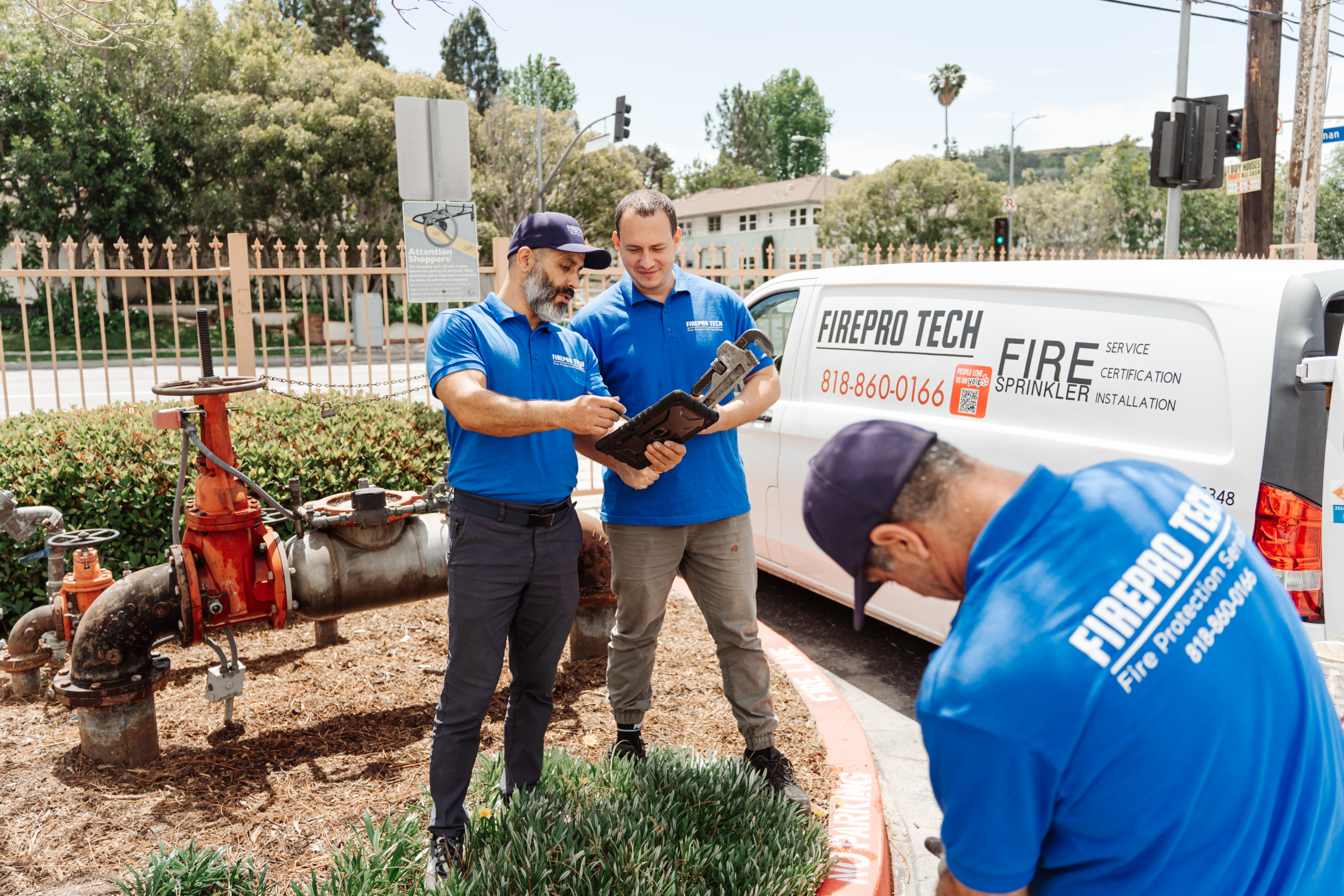
A fire sprinkler system is a kind of protection that should operate in the most stressful conditions. Since it guarantees your safety from a disastrous element like fire, it’s no wonder there are strict fire sprinkler system inspection requirements. In this article we are going to break down all of them so you can clearly see what’s important and why. Keep reading to learn secrets of California fire sprinkler inspection requirements and pass your inspection smoothly.
What Is Fire Sprinkler Inspection?
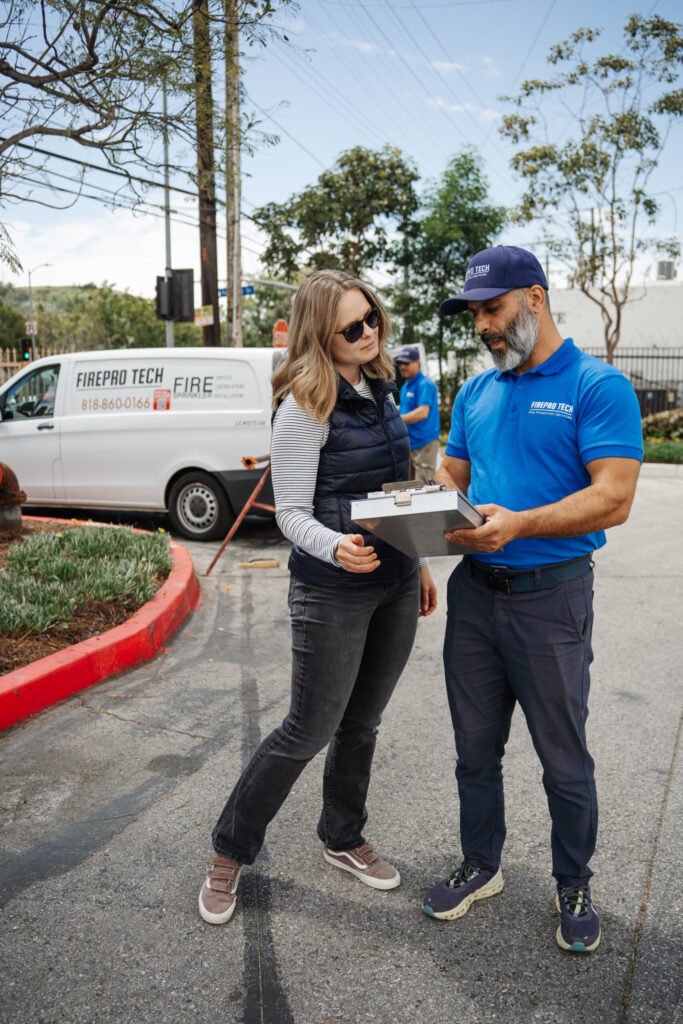
As with any inspection, this one is made to ensure everything works as designed so the system won’t fail when needed the most. An inspector checks system components, water supply, valves, alarms, piping, sprinkler heads, and everything else. Among other California fire sprinkler inspection requirements, there are some crucial statements, like compliance with NFPA 25. In addition, your sprinkler system also should fit local building and fire codes. You might think that inspection and testing are the same thing. We cleared this question in our Fire Sprinkler Inspection & Testing: What You Need to Know article. In short, testing is done to find out and fix all issues with the system, while inspection confirms everything is alright.
Importance of Fire Sprinkler Inspection
When there is no fire, you might think that system isn’t your first priority, so you put the inspection away. However, this action can be a regretful solution if something bad happens. Regular inspections ensure:
- Immediate activation during a fire
- Proper water pressure and flow
- Compliance with building codes
- Reduced liability risks
- Lower insurance complications
As you can see, inspection requirements ensure that families will stay safe and protected from fire hazards.
Fire Sprinkler Inspection Requirements Frequency
NFPA 25 provides a certain frequency for each type of system and property type. It’s important to remember that it’s up to authorities to adopt these intervals or assign others. In any case, regular service is also a part of fire sprinkler inspection requirements. For a deeper comparison of inspection intervals, read How Often Should a Fire Sprinkler System Be Inspected?.
Regular Inspection Schedule: Quarterly, Semi-Annual, and Annual Checks
Most systems follow this schedule:
Quarterly Inspections
- Control valves
- Alarm devices
- Gauges
- Supervisory systems
Semi-Annual Inspections
- Water flow devices
- Valve supervisory switches
Annual Inspections
- Sprinkler heads
- Piping condition
- Hangers and bracing
- Main drain test
In addition, internal pipe inspections and obstruction investigations may be required every five years. These intervals form the backbone of standard fire sprinkler system inspection requirements across commercial and residential properties.
What to Inspect in a Fire Sprinkler System
When you’re trying to meet inspection requirements for commercial properties, it’s crucial to remember that they involve a more detailed review. This is made to ensure safety even in big and highly occupied spaces. However, it won’t be a disadvantage to meet these standards in residential properties as well.
Key Components to Check
During an inspection, professionals evaluate:
Water Supply
Adequate water pressure and reliable connection to municipal or private sources.
Pipes and Fittings
Leaks, corrosion, obstructions, mechanical damage, and secure hangers.
Control Valves
Properly positioned (open), sealed or locked where required, and free from damage.
Sprinkler Heads
No corrosion, paint, loading (dust/debris), or physical damage.
Alarms
Proper functionality of water flow alarms and supervisory signals.
Detectors
Integration with fire alarm systems where applicable.
By the way, we were called the best fire sprinkler company in Glendale, so you can have a professional testing of your fire sprinklers with us.
Visual Fire Sprinkler Inspection Requirements
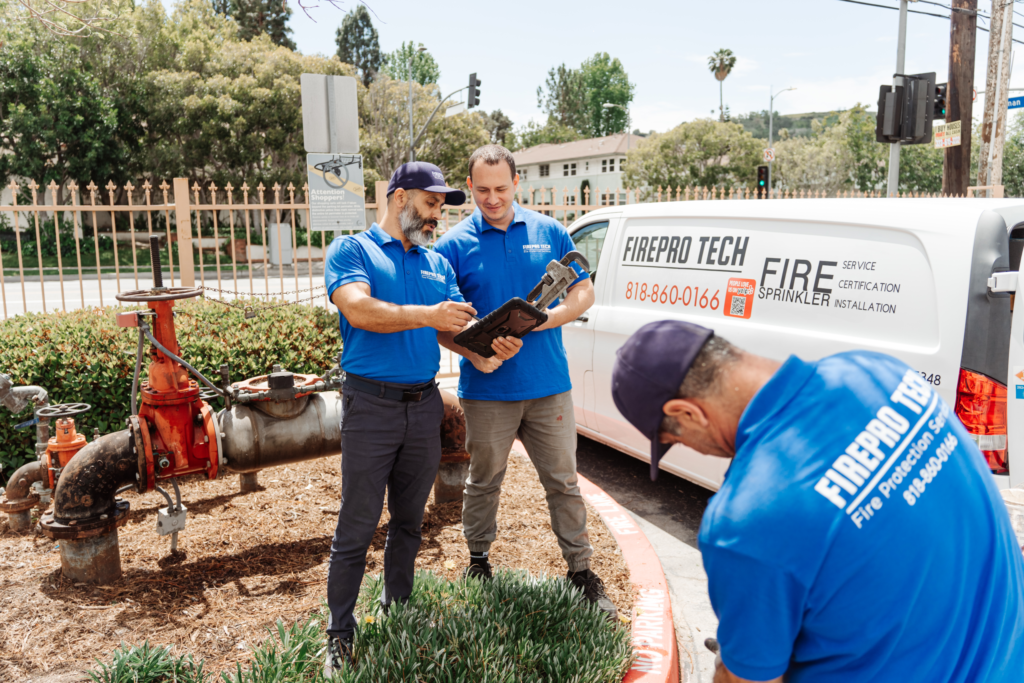
It might seem like a preferable thing to do a visual inspection on your own, thinking you’ll notice if something is wrong. However, preventive visual inspection helps identify obvious deficiencies before they escalate. California fire sprinkler inspection requirements highlight the importance of visual checks.
Visual Inspection Checklist
A professional fire sprinkler inspection checklist should include reviewing:
Leaks
Any signs of dripping, moisture accumulation, or pressure loss.
Physical Damage
Bent pipes, broken sprinkler heads, or damaged fittings.
Corrosion
Rust buildup on pipes, fittings, or heads that may restrict flow.
Paint Issues
Sprinkler heads should never be painted. Paint can prevent proper activation.
Incorrect Orientation
Sprinkler heads must be installed in the correct upright, pendant, or sidewall position.
Minimum Clearance
Clearance is a crucial element for proper functioning of sprinkler heads. Ensure there is enough space from any obstructions around it.
You can use this list as a fire sprinkler inspection checklist to prepare before a real inspection with a professional technician. As well, visual checks are part of sprinkler maintenance. Our guide on Home Fire Sprinkler System Maintenance Tips provides a comprehensive insight into everything you should know about maintenance.
Fire Sprinkler Inspection Report Requirements
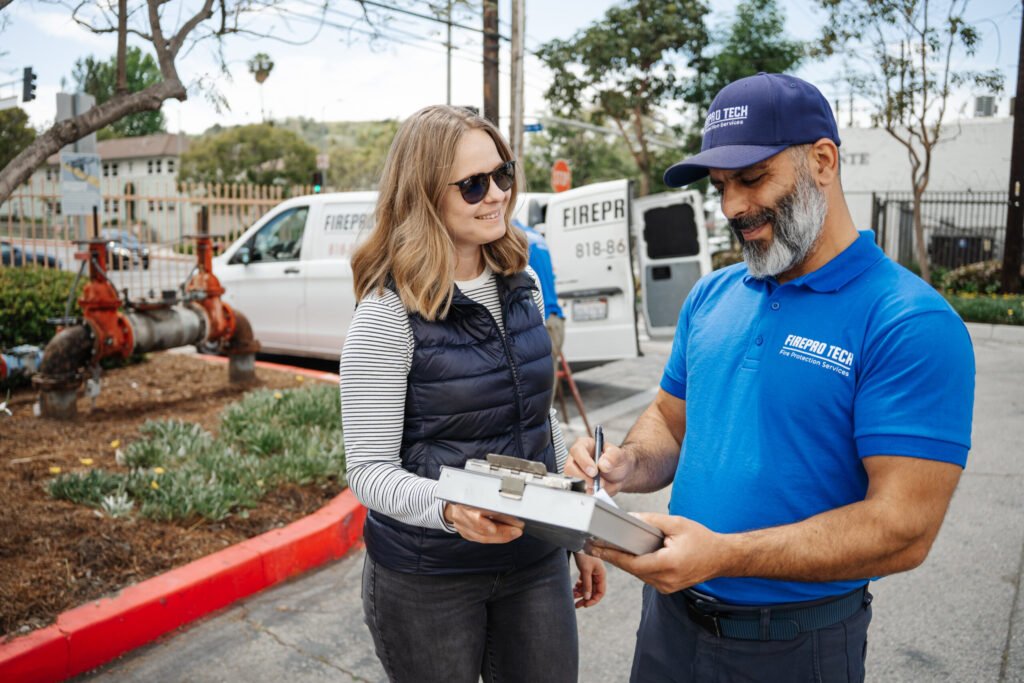
The inspection won’t be valid without a detailed report. In this document, specialists will find a clear demonstration of compliance with fire sprinkler inspection requirements.
A proper inspection report should include:
- Inspection date
- Technician certification details
- System type and location
- Deficiencies found
- Required corrective actions
- Confirmation of repairs (if completed)
For commercial facilities, maintaining accurate records is essential to satisfy fire marshals and insurance carriers. This is especially important for commercial properties, where audits and documentation reviews are common.
Ensuring Proper Function and Compliance
There are things we hope you’ll never have to see in action, and fire sprinklers are on this list. However, it’s impossible to escape a fire with minor damage without it. And we are strongly convinced that it’s cheaper to maintain your system from time to time than to calculate losses if it won’t activate during the fire. That’s the reason behind the importance of meeting fire sprinkler inspection requirements.
It’s not a question of meeting fire sprinkler system inspection requirements only once after installation. Your system should stay in perfect condition all of the time, so both routine visual checks and annual or five-year testing are crucial to stay safe.
At FirePro Tech we are experts in California fire sprinkler inspection requirements, so with us you can be sure that all of them will be compliant with all state and local codes. Proactive inspections today prevent catastrophic failures tomorrow — and that’s a responsibility no property owner can afford to overlook