


Fire sprinkler head replacement and relocation comes up more often than most building owners expect. Renovations move walls. Inspections flag clearance violations. Heads corrode, get painted over, or simply reach the end of their service life. When any of that happens, the work needs to be done correctly — with the right planning, the right tools, and a licensed contractor.
Fire sprinkler head replacement and relocation in Los Angeles comes up more often than most building owners expect — and the rules around who can replace fire sprinkler heads are strict. Residential fire sprinkler head replacement carries the same licensing requirements as commercial work. C-16 licensed contractor, permit pulled, inspection completed. No exceptions.
This guide covers what triggers replacement or relocation, what the code requires, how the process works, and what it costs. All of it applies to properties in Los Angeles and LA County.
What Is Fire Sprinkler Head Relocation?
Relocation moves a sprinkler head from its current position to a new one within the same system. It is not the same as a simple fire sprinkler head replacement — that one swaps the head in place. Relocation means extending or rerouting pipe, recalculating coverage, and confirming the new position meets all applicable codes.
It is a more involved job than it looks. The head is one piece of it. The pipe feeding it, the pressure at that point, clearance from obstructions, spacing from neighboring heads — all of it gets evaluated and adjusted. Done right, relocation improves system performance. Done wrong, it creates coverage gaps or fails inspection.
Why Fire Sprinkler Head Replacement or Relocation Becomes Necessary
Renovations and Space Repurposing
New walls block spray patterns. Dropped ceilings shift head-to-floor distances. Mezzanines and storage racking create obstructions that weren’t there when the system was designed. Any renovation touching walls, ceilings, or occupancy type should trigger a sprinkler system review — before construction wraps up, not after.
Compliance with Updated Fire Safety Regulations
NFPA standards update on a regular cycle. Local jurisdictions — including Los Angeles — sometimes adopt amendments that go beyond national requirements. A system that was fully compliant ten years ago may not meet current standards after a major code revision or a change of occupancy.
Clearance Compliance
NFPA 13 requires at least 18 inches of clear space between the sprinkler deflector and anything stored or mounted below it. In warehouses and storage facilities, rack heights tend to creep upward over time. In offices, suspended lighting and HVAC ductwork get added during renovations. Either way, a clearance violation needs a fix — move the head or reconfigure what’s underneath.
Obstruction Resolution
Past the 18-inch rule, heads need a clear path for water to reach the full coverage area. Beams, columns, and large ductwork all create shadow zones — areas the spray can’t reach. New obstructions mean affected heads get repositioned or additional heads get added to cover the gap.
System Upgrades or Retrofitting
Newer head designs heat faster, cover more area, and perform better in specific environments. But different spacing requirements often come with them. A system upgrade isn’t just a swap — it’s a recalculation. Retrofitting a fire sprinkler system almost always includes relocation work as part of the broader project.
Code and Regulatory Requirements
NFPA 13 and NFPA 13R Standards
NFPA 13 is the national standard for commercial sprinkler design and installation — head spacing, coverage areas, clearance distances, pipe sizing, water supply. NFPA 13R covers residential occupancies up to four stories and has its own set of requirements. NFPA 13D applies to single and two-family dwellings and manufactured homes — the standard most relevant for residential fire sprinkler head replacement work in LA County. Whichever applies to your building, the relocation gets evaluated against that standard.
Local Permits and Authority Requirements
In most jurisdictions, relocating even one sprinkler head requires a permit. In Los Angeles, LAFD requirements add steps that NFPA alone doesn’t capture. Plans go in showing current and proposed head positions, along with hydraulic calculations. Inspection follows when the work is done.
Skip the permit and you’re looking at fines, mandatory removal, and insurance problems — none of which are inexpensive.
Sprinkler Head Spacing and Coverage Rules
NFPA 13 sets maximum coverage areas and spacing distances by hazard classification — light, ordinary, or high hazard. Move a head too far from its neighbor and you’ve created an unprotected zone between them. Move heads too close and you’ve wasted coverage while throwing off the hydraulic balance.
Clearance Requirements
The 18-inch minimum applies to shelving, storage, and equipment below the deflector. In rack storage, in-rack sprinklers may be required past certain rack heights. Structural elements — beams, columns, large ducts — may need additional heads to cover shadow areas behind them.
According to NFPA’s 2024 U.S. Experience with Sprinklers report, sprinkler systems operated successfully in 92% of fires large enough to activate them — and are effective 97% of the time when inspected and maintained per code.
Technical Considerations Before Fire Sprinkler Head Replacement or Relocation
System Hydraulics and Water Pressure
Sprinkler systems are hydraulic networks. Moving a head further from the water source increases friction losses and can reduce flow below the minimum required. Hydraulic calculations must confirm the new position gets adequate pressure before work begins. If not, pipe upgrades come first.
Pipe Length and Extension Planning
Moving a head almost always requires extending the branch line. In ceiling tile systems, the contractor maps the existing layout, identifies the closest fitting point, routes around HVAC and electrical, and confirms proper pipe support throughout.
Choosing the Right Sprinkler Head Type
The replacement must match the K-factor of the original design position. It must also suit the ceiling type — concealed heads need matching cover plates, recessed heads need compatible escutcheons. See our guide on different types of sprinkler systems for a full breakdown.
Obstruction Assessment
The space above the ceiling must be physically inspected before cutting. HVAC ducts, electrical panels, and existing pipe runs all need accounting for. What appears clear on a drawing is sometimes blocked in reality — and discovering that after cutting is expensive.
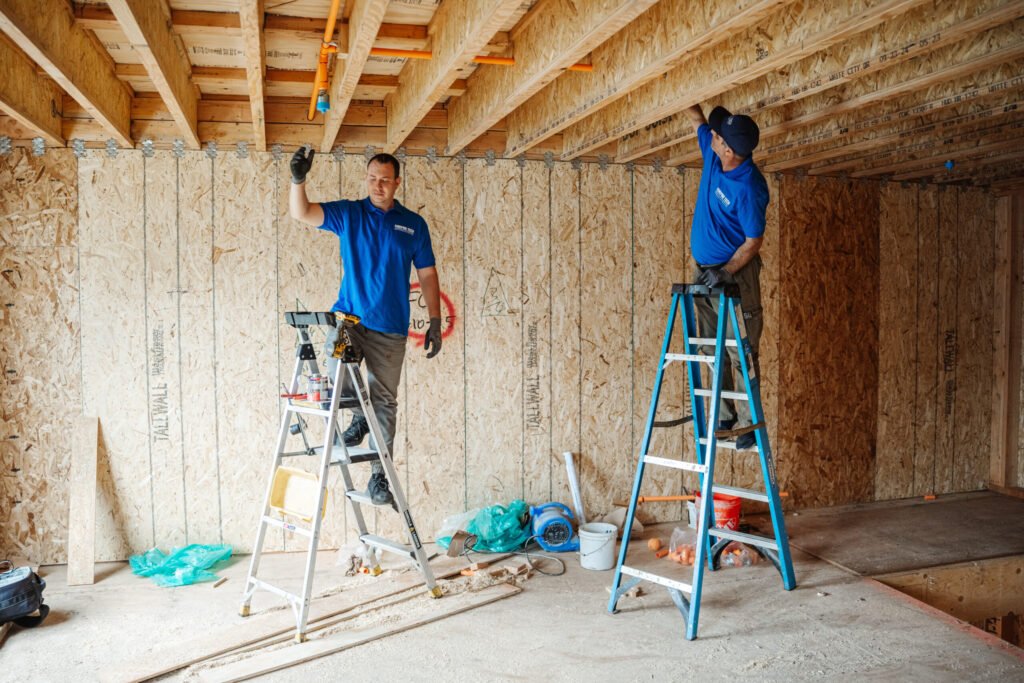
Step-by-Step Process: Fire Sprinkler Head Replacement and Relocation
Step 1 — Identify the New Location
The installer physically marks the new position based on the approved plan and confirmed measurements. Spacing relative to all neighboring heads and walls is verified before any cutting begins.
Step 2 — Clear the Path and Measure Pipe Extension
Ceiling tiles are removed along the planned pipe route. The installer checks for obstructions, measures the pipe extension needed, and cuts the new section accordingly.
Step 3 — Remove the Old Sprinkler Head
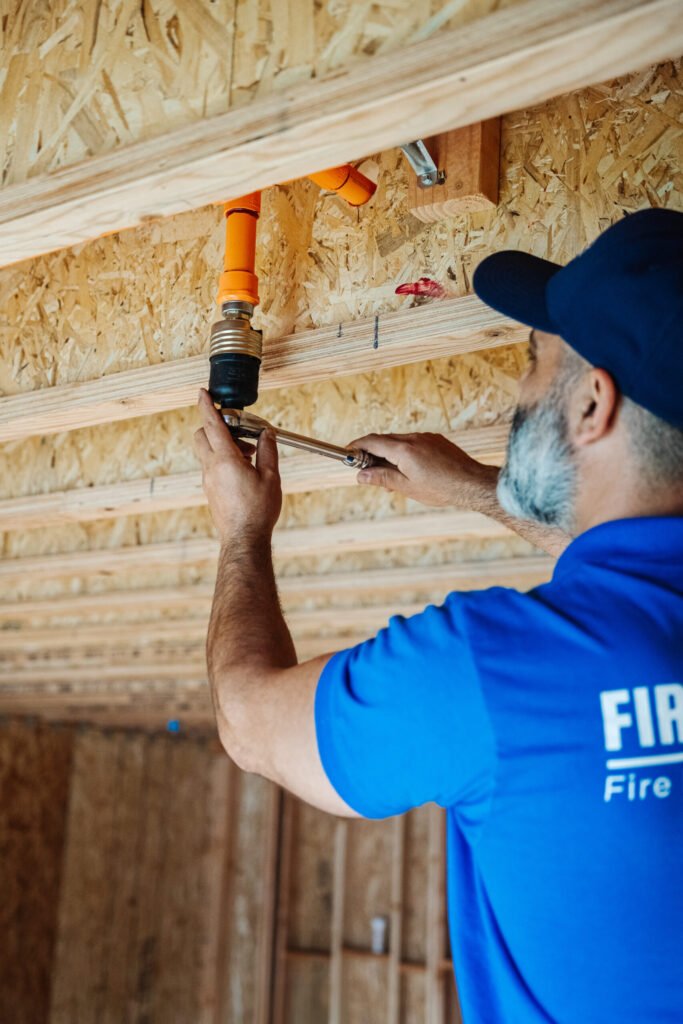
Water supply to the affected zone shuts down first. The system drains or gets isolated. The old head comes out using a proper fire sprinkler head removal tool — never a standard pipe wrench, which damages the fitting and can crack the seat. Using the correct fire sprinkler head removal tool is one of the details that separates experienced contractors from those who cut corners.
Step 4 — Extend the Water Line
The new pipe section runs from the existing branch line to the new head location. All connections are threaded, sealed with PTFE tape, and tightened to proper torque. Pipe hangers go in at the spacing required for the pipe diameter.
Step 5 — Install and Connect the New Head
The new head installs with a sprinkler head wrench — hand-tight first, then to final torque. Overtightening cracks the head body. The deflector sits at the correct depth below the ceiling surface for its head type.
Step 6 — Test and Inspect
Water supply restores to operating pressure. Every new connection gets inspected for leaks. The fire alarm resets and verifies. Where a final inspection is required — which it is in most LA County jurisdictions — the fire marshal or building inspector reviews the work before sign-off.
Post-Relocation Testing and Maintenance
Leak checks happen immediately when the system pressurizes. Any drip at a new joint gets corrected before the system returns to service.
Flow testing confirms hydraulic performance matches the approved calculations. Coverage verifies against the approved plans — every head confirmed in its approved position.
Ongoing maintenance follows NFPA 25 requirements: visual inspection of heads annually, fire sprinkler inspection requirements for the full system on schedules ranging from quarterly to five-year intervals depending on the component. Proper pipe support during relocation also reduces the risk of stress fractures over time — see our guide on preventing broken sprinkler pipe bursts for what to watch for.
Cost of Moving or Replacing a Fire Sprinkler Head
Factors That Affect the Price
Pipe work required, ceiling access conditions, number of heads, permit and engineering requirements — these drive the cost. Simple ceiling tile systems with short extensions cost less than concrete structures requiring demolition and restoration.
Average Cost Estimates
Moving a single sprinkler head in a standard commercial setting typically runs $200 to $800. Residential fire sprinkler head replacement in accessible locations sits toward the lower end of that range. The sprinkler head relocation cost goes up fast with complex situations — older buildings, limited access, multi-story pipe runs push past $1,000 per head.
When Costs Increase
Costs escalate when structural work is needed to access the pipe, when hydraulic calculations reveal piping upgrades are required, or when local permitting involves extended review timelines. Emergency or after-hours work carries a premium. Sprinkler head relocation cost is best determined by a licensed contractor site visit — not an online estimate.
Can You DIY Fire Sprinkler Head Replacement or Relocation?
No. Fire sprinkler systems are life-safety equipment. Their modification is restricted by law to licensed fire protection contractors in virtually every jurisdiction.
In California, a C-16 license from the Contractors State License Board is required. Who can replace fire sprinkler heads legally in LA County? A C-16 licensed contractor — and that’s it. Fire sprinkler head replacement requirements in California are specific and enforced — attempting this work without a license exposes the building owner to fines, may void insurance coverage, and leaves occupants unprotected if the system fails.
“In 15 years of doing this work in LA County, the most expensive jobs we get called to fix are the ones someone started without a C-16 license. Unpermitted head relocations almost always require complete removal and reinstallation — and the building owner pays for it twice.” — Robert, CEO FireProTech, C-16 Licensed, Los Angeles
How to Choose a Qualified Professional
C-16 license — confirm it exists before anything else. Then verify liability insurance and workers’ compensation. Ask for references from projects of comparable scope in your occupancy type.
The contractor should come out and look at the site before quoting. They review existing system drawings, walk through the permit process for your specific jurisdiction, and explain the hydraulic implications of what you’re planning. If they can’t do that, find someone else.
In Los Angeles, not knowing LAFD requirements isn’t a minor gap — it means failed inspections and rework that comes out of your pocket. Ask whether the contractor knows the local amendments to NFPA standards. The answer tells you fast what you’re dealing with.
Frequently Asked Questions
How long does it take to move a sprinkler head?
Two to four hours for a single head in a standard ceiling tile setup. Multiple heads or complex access extends that to a full day or more. Permit approval time is separate.
Do I need a permit to move a fire sprinkler head?
Yes. Any modification to a fire sprinkler system in California requires a permit. Confirm the specific requirements with the local AHJ before starting work.
Will relocating sprinkler heads affect my insurance?
It can. Unpermitted or improperly executed work can give insurers grounds to reduce or deny claims. Use a licensed contractor, get the permit, and retain all inspection records.
How far can a head be legally relocated?
No single universal maximum exists. The allowable range depends on hazard classification, NFPA 13 spacing requirements, and branch line hydraulic capacity. A licensed contractor must run the calculations specific to your system.
Can the system stay on during the work?
Usually the affected zone must shut down. In systems with zone isolation valves, only that section goes offline. Full shutdowns are sometimes unavoidable in older buildings without zone valving.
Get a Professional Assessment from FireProTech — C-16 Licensed in Los Angeles
Fire sprinkler head replacement requirements in California are specific, and the permit process in Los Angeles adds layers that most generic contractors aren’t prepared for. FireProTech handles relocation and replacement projects across Los Angeles and LA County — from the initial site assessment through permit submission, installation, and final inspection.
FireProTech has completed 23 fire sprinkler projects in Altadena following the 2025 fires — permits obtained, installations finished, and all inspections passed. Our teams are actively working in the area throughout the week.
C-16 licensed. Fully insured. Every job meets NFPA 13 and California Title 19 requirements.
📞 Call FireProTech for a same-day consultation. 📸 Instagram | Facebook